GC in Focus
EP.16 GC Stands Out Through Bioplastics Innovation — Creating Better Choices for the World and Everyday Life
As the world seeks new alternatives to reduce its reliance on fossil resources, the materials we use in everyday life are evolving.
Bioplastics, or plastics made from plant-based feedstocks, are more than alternative materials. They offer another solution that can help reduce environmental impact while adding value to Thailand’s agricultural resources and meeting the needs of future industries
From Sugarcane to World-Class Bioplastics
Fifteen years ago, GC embraced the belief that “good materials should not only meet functional needs but also play a role in protecting our planet.” Guided by this vision , GC has pioneered and expanded its low-carbon business through its joint venture investment in NatureWorks, the world’s largest producer of Polylactic Acid (PLA).
This year, NatureWorks opened Asia’s first fully integrated PLA Bioplastics manufacturing facility at the Nakhon Sawan Biocomplex in Nakhon Sawan Province, Thailand. With an annual production capacity of 75,000 tonnes, it is NatureWorks’ second manufacturing facility after its plant in the United States.
The facility employs world-class bioplastics technology to produce Ingeo™ biomaterials certified to internationally recognized standards, including USDA BioPreferred and ISCC PLUS. This milestone advances Thailand’s role as a leading Bioplastics Hub in Asia
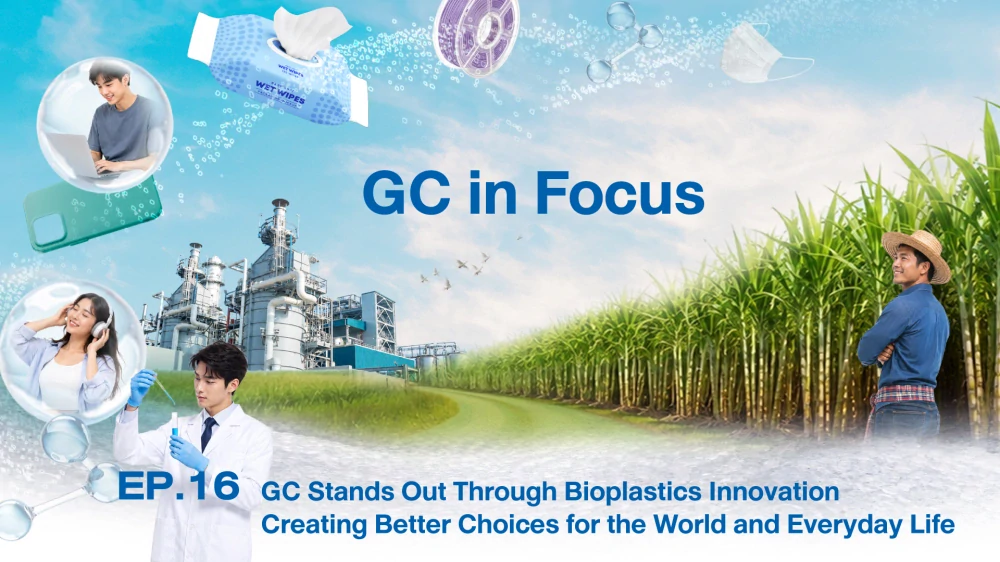
This facility demonstrates how renewable resources can be transformed into tangible value by converting sugar derived from sugarcane into PLA bioplastics—a low-carbon material that can be developed into a wide range of products. These include tea bags, coffee capsules, food packaging, household and consumer products such as electrical appliance components, office supplies, phone cases and cosmetic packaging, as well as diapers, cleaning wipes, face masks and filaments for 3D printing
With the ability to biodegrade under appropriate conditions, PLA bioplastics provide an alternative that can help reduce environmental impact
Beyond expanding the range of environmentally friendly material options, the facility also builds on Thailand’s strengths by adding value to agricultural feedstocks—particularly those from the sugarcane and sugar industries—and transforming them into high-value products that meet global market demand. This enhances the country’s competitiveness, creates new opportunities for farmers, communities and related industries, and supports the continued development of Thailand’s bioeconomy.
Establishing a bioplastics manufacturing base in Thailand also strengthens supply chain resilience, supports growing global demand for low-carbon materials and reduces exposure to volatility in fossil-based feedstocks—an increasingly important consideration for industries in an era of uncertainty.
This represents a significant step forward for GC in advancing its Green & Bio chemicals business and supporting the transition towards a low-carbon society and a sustainable future for all.
More Than a New Material is A New Opportunity for Thailand
As the world seeks new alternatives, bioplastics are more than simply alternative materials; they represent another step in the transition towards a more sustainable future.
Their benefits extend beyond consumers. Bioplastics add value to Thailand’s sugarcane and sugar industries, create opportunities for farmers, communities and related industries, advance Thailand’s position as a regional hub for bio-based materials production, and strengthen supply chain resilience amid global uncertainty.
Other GC in Action